---
title: "How to Sell Your Asphalt Business: The Contractor's Exit Strategy"
description: Ready to move on? Learn the steps for selling your asphalt business. Find out how to value your company, find the right buyer, and get the best price.
image: https://blog.asphaltkingdom.com/hubfs/Blog%20Images%20(16)-2.jpg
---
[](https://www.asphaltkingdom.com) Asphalt Maintenance Made Easy
 
- Supplies
- [All Supplies](https://www.asphaltkingdom.com/supply-store.html)
- [Crack Filler](https://www.asphaltkingdom.com/crack-fill-store.html)
- [Sealer](https://www.asphaltkingdom.com/asphalt-sealer.html)
- [Line Paint & Stencils](https://www.asphaltkingdom.com/parking-line-paint.html)
- [Cold Asphalt Patch Repair](https://www.asphaltkingdom.com/asphalt-patch.html)
- [Cleaning Supplies](https://www.asphaltkingdom.com/maintenance-supplies.html)
- [Traffic Safety](https://www.asphaltkingdom.com/traffic-safety.html)
- Equipment
- [All Equipment](https://www.asphaltkingdom.com/sealcoating-equipment.html)
- [Crack Filling Equipment](https://www.asphaltkingdom.com/crack-filling-equipment.html)
- [Sealcoat Sprayer](https://www.asphaltkingdom.com/sealcoat-sprayer.html)
- [Line Stripers](https://www.asphaltkingdom.com/striping-machines.html)
- [Asphalt Patching](https://www.asphaltkingdom.com/asphalt-patching-store.html)
- [Gas Blowers](https://www.asphaltkingdom.com/asphalt-blowers.html)
- Parts & Accessories ▶
- [Sealer Sprayer Parts](https://www.asphaltkingdom.com/sealer-sprayer-parts.html)
- [Crack Filling Equipment Parts](https://www.asphaltkingdom.com/crack-repair-parts.html)
- [RY10 / RY10 Pro Replacement Parts](https://www.asphaltkingdom.com/replacement-parts.html)
- [Line Striper Parts](https://www.asphaltkingdom.com/line-painting-accessories.html)
- [Cleaning Supplies](https://www.asphaltkingdom.com/maintenance-supplies.html)
- [Line Striping Accessories](https://www.asphaltkingdom.com/asphalt-line-painting-parts.html)
- [Spray System Accessories](https://www.asphaltkingdom.com/spray-system-accessories.html)
- [Asphalt Tools](https://www.asphaltkingdom.com/asphalt-tools.html)
- Parking Lot Stencils ▶
- [Word Stencils](https://www.asphaltkingdom.com/wording-stencils.html)
- [Handicap Stencils](https://www.asphaltkingdom.com/handicap-stencils.html)
- [Letter Stencils](https://www.asphaltkingdom.com/letter-stencil-kits.html)
- [Number Stencil Kits](https://www.asphaltkingdom.com/number-stencil-kit.html)
- [Road Stencils](https://www.asphaltkingdom.com/roadway-stencils.html)
- [Surface Preparation](https://www.asphaltkingdom.com/asphalt-cleaning.html)
- [Asphalt Business Packages](https://www.asphaltkingdom.com/start-a-business.html)
- [Sale](https://www.asphaltkingdom.com/sale.html)
- [Property Managers](https://info.asphaltkingdom.com/asphalt-parking-lot-repair)
- [Contractors](https://info.asphaltkingdom.com/existing-business)
- [Start a Business](https://info.asphaltkingdom.com/start-your-business)
- Resources
- [All Resources](https://info.asphaltkingdom.com/asphalt-maintenance-resources)
- [Business Solutions](https://info.asphaltkingdom.com/business-solutions)
- [Training Courses](https://info.asphaltkingdom.com/asphalt-maintenance-resources#2)
- [AK DASH CRM](https://akdash.com/)
- [Coaching](https://info.asphaltkingdom.com/asphalt-coaching)
- [Success Stories](https://info.asphaltkingdom.com/success-stories)
- [Weekly Roundtable](https://info.asphaltkingdom.com/weekly-roundtable)
- [Parking Lot Calculator](https://www.asphaltkingdom.com/mapping-tool-customer-sign-up)
- [Supply Calculators](https://info.asphaltkingdom.com/asphalt-supply-calculators)
- [AK Vault](https://info.asphaltkingdom.com/the-vault)
- [Video Center](https://info.asphaltkingdom.com/video-center)
- [Media](https://info.asphaltkingdom.com/media)
- [Blog](https://blog.asphaltkingdom.com/)
- [FAQ](https://www.asphaltkingdom.com/asphalt-faq.html)
- [Testimonials](https://info.asphaltkingdom.com/testimonials)
- [Events Calendar](https://info.asphaltkingdom.com/calendar-of-events)
- [Contact](https://info.asphaltkingdom.com/contact)
- [Account](https://www.asphaltkingdom.com/customer/account/)
Speak to an Asphalt Expert!
[1-866-399-5562](tel:1-866-399-5562)
[tel:1-866-399-5562](tel:1-866-399-5562)
 
Speak to an Asphalt Expert!
[1-866-399-5562](tel:1-866-399-5562)
 
- Supplies
- [All Supplies](https://www.asphaltkingdom.com/supply-store.html)
- [Crack Filler](https://www.asphaltkingdom.com/crack-fill-store.html)
- [Sealer](https://www.asphaltkingdom.com/asphalt-sealer.html)
- [Line Paint & Stencils](https://www.asphaltkingdom.com/parking-line-paint.html)
- [Cold Asphalt Patch Repair](https://www.asphaltkingdom.com/asphalt-patch.html)
- [Cleaning Supplies](https://www.asphaltkingdom.com/maintenance-supplies.html)
- [Traffic Safety](https://www.asphaltkingdom.com/traffic-safety.html)
- Equipment
- [All Equipment](https://www.asphaltkingdom.com/sealcoating-equipment.html)
- [Crack Filling Equipment](https://www.asphaltkingdom.com/crack-filling-equipment.html)
- [Sealcoat Sprayer](https://www.asphaltkingdom.com/sealcoat-sprayer.html)
- [Line Stripers](https://www.asphaltkingdom.com/striping-machines.html)
- [Asphalt Patching](https://www.asphaltkingdom.com/asphalt-patching-store.html)
- [Gas Blowers](https://www.asphaltkingdom.com/asphalt-blowers.html)
- Parts & Accessories ▶
- [Sealer Sprayer Parts](https://www.asphaltkingdom.com/sealer-sprayer-parts.html)
- [Crack Filling Equipment Parts](https://www.asphaltkingdom.com/crack-repair-parts.html)
- [RY10 / RY10 Pro Replacement Parts](https://www.asphaltkingdom.com/replacement-parts.html)
- [Line Striper Parts](https://www.asphaltkingdom.com/line-painting-accessories.html)
- [Cleaning Supplies](https://www.asphaltkingdom.com/maintenance-supplies.html)
- [Line Striping Accessories](https://www.asphaltkingdom.com/asphalt-line-painting-parts.html)
- [Spray System Accessories](https://www.asphaltkingdom.com/spray-system-accessories.html)
- [Asphalt Tools](https://www.asphaltkingdom.com/asphalt-tools.html)
- Parking Lot Stencils ▶
- [Word Stencils](https://www.asphaltkingdom.com/wording-stencils.html)
- [Handicap Stencils](https://www.asphaltkingdom.com/handicap-stencils.html)
- [Letter Stencils](https://www.asphaltkingdom.com/letter-stencil-kits.html)
- [Number Stencil Kits](https://www.asphaltkingdom.com/number-stencil-kit.html)
- [Road Stencils](https://www.asphaltkingdom.com/roadway-stencils.html)
- [Surface Preparation](https://www.asphaltkingdom.com/asphalt-cleaning.html)
- [Asphalt Business Packages](https://www.asphaltkingdom.com/start-a-business.html)
- [Sale](https://www.asphaltkingdom.com/sale.html)
- [Property Managers](https://info.asphaltkingdom.com/asphalt-parking-lot-repair)
- [Contractors](https://info.asphaltkingdom.com/existing-business)
- [Start a Business](https://info.asphaltkingdom.com/start-your-business)
- Resources
- [All Resources](https://info.asphaltkingdom.com/asphalt-maintenance-resources)
- [Business Solutions](https://info.asphaltkingdom.com/business-solutions)
- [Training Courses](https://info.asphaltkingdom.com/asphalt-maintenance-resources#2)
- [AK DASH CRM](https://akdash.com/)
- [Coaching](https://info.asphaltkingdom.com/asphalt-coaching)
- [Success Stories](https://info.asphaltkingdom.com/success-stories)
- [Weekly Roundtable](https://info.asphaltkingdom.com/weekly-roundtable)
- [Parking Lot Calculator](https://www.asphaltkingdom.com/mapping-tool-customer-sign-up)
- [Supply Calculators](https://info.asphaltkingdom.com/asphalt-supply-calculators)
- [AK Vault](https://info.asphaltkingdom.com/the-vault)
- [Video Center](https://info.asphaltkingdom.com/video-center)
- [Media](https://info.asphaltkingdom.com/media)
- [Blog](https://blog.asphaltkingdom.com/)
- [FAQ](https://www.asphaltkingdom.com/asphalt-faq.html)
- [Testimonials](https://info.asphaltkingdom.com/testimonials)
- [Events Calendar](https://info.asphaltkingdom.com/calendar-of-events)
- [Contact](https://info.asphaltkingdom.com/contact)
- [Account](https://www.asphaltkingdom.com/customer/account/)
# How to Sell Your Asphalt Business: The Contractor's Exit Strategy
Ready to move on? Learn the steps for selling your asphalt business. Find out how to value your company, find the right buyer, and get the best price.
Posted by [Judson Burdon](https://blog.asphaltkingdom.com/author/judson-burdon) on April 9, 2026
Find me on
-2.jpg?width=720&height=405&name=Blog%20Images%20(16)-2.jpg)
Building a pavement maintenance company from the ground up takes a lot of hard work. You have spent years pouring your sweat into sealcoating, crack filling, and paving. You built a loyal customer list. You invested in the best equipment. Now, you might be ready for the next chapter of your life.
Selling a business is a massive step. It can feel just as overwhelming as starting one. But it does not have to be stressful. If you plan ahead, you can hand over the keys and walk away with a great payout. You just need a solid plan. You need to know your numbers, find the right buyer, and negotiate a fair deal.
In this guide, we will walk you through the entire process of selling your asphalt business. We want to help you get the best return on all your hard work. Let us look at everything you need to know to make your sale a total success.
## Table of Contents
1. [Knowing When It Is Time to Sell](https://blog.asphaltkingdom.com/sell-asphalt-business#s1)
2. [Getting Your Business Ready for a Sale](https://blog.asphaltkingdom.com/sell-asphalt-business#s2)
3. [How to Value Your Asphalt Business](https://blog.asphaltkingdom.com/sell-asphalt-business#s3)
4. [How to Find the Perfect Buyer for Your Asphalt Business](https://blog.asphaltkingdom.com/sell-asphalt-business#s4)
5. [Negotiating and Closing the Deal](https://blog.asphaltkingdom.com/sell-asphalt-business#s5)
6. [Handing Over the Reins](https://blog.asphaltkingdom.com/sell-asphalt-business#s6)
7. [Conclusion](https://blog.asphaltkingdom.com/sell-asphalt-business#s7)
8. [Frequently Asked Questions (FAQ)](https://blog.asphaltkingdom.com/sell-asphalt-business#s8)
## Knowing When It Is Time to Sell
Timing is everything in the asphalt industry. You cannot sealcoat in the rain, and you should not sell your company at the wrong time. So, how do you know it is the right time to sell?
First, look at your personal goals. Maybe you are ready to retire and spend more time with your family. Maybe you want to start a brand new business in a completely different field. Burnout is also a very real thing in the contracting world. The summer heat is tough. If you wake up and no longer feel excited about sealing driveways or patching potholes, it might be time to move on.
Second, look at the local market. Are asphalt services in high demand in your area? If your schedule is fully booked and your profits are up, your company is very attractive to buyers. It is always better to sell when your business is at its peak. Buyers want a company that is making money right now. If you wait until your sales drop, you will get a much lower asking price.
You also need to think about the economy. When loans have low interest rates, more buyers can afford to buy your business. Keep an eye on the market and trust your gut.
## **Getting Your Business Ready for a Sale**
**-1.jpg?width=720&height=405&name=Blog%20Images%20(17)-1.jpg)**
You would never sealcoat a dirty driveway without cleaning it first. You have to use a wire broom and blow off the dirt. Selling your asphalt business requires the exact same approach. You have to prepare your business before you list it on the open market.
Organize your paperwork: Buyers will want to see solid proof that your business makes money. You need at least three years of clean financial records. This includes your tax returns, your profit and loss statements, and a detailed list of your expenses. If your bookkeeping is a mess, hire an accountant to clean it up.
Take a close look at your equipment: Make sure your sealcoat sprayers, crack melters, and trucks are in great shape. Fix any broken pumps or hoses. Give everything a good wash. A buyer will pay much more if they see well-maintained equipment. Take an inventory of your leftover supplies. Count your pallets of crack filler and your drums of sealer.
Document your daily operations: Create a simple manual that explains how you run your business. Include your supplier contacts at Asphalt Kingdom, your equipment maintenance schedules, and your customer lists. A business that can run smoothly without you is worth a lot more money.
## How to Value Your Asphalt Business
Figuring out the exact price of your company is the hardest part. You know how much blood and sweat you put into it over the years. But buyers only care about the numbers. They want to know when they will make their money back.
To value your company, you need to calculate your *Seller Discretionary Earnings*. This is the total cash flow the business generates for the owner in a single year. It includes your base salary, your company profits, and any personal perks paid for by the business.
Once you have that number, you multiply it by a standard industry multiple. For small paving and maintenance companies, this multiple is usually between two and three. For example, if your business generates $100,000 in owner earnings, the asking price might be between $200,000 and $300,000.
You also need to add the value of your hard assets. Calculate the fair market value of your trucks, trailers, line stripers, and heavy machinery. Do not use the price you paid for them brand new. Use the price they would sell for today. If you need help with this math, you can always hire a professional business broker or a business appraiser.
## How to Find the Perfect Buyer for Your Asphalt Business
Once your business is priced right, it is time to find a buyer. You have a few different options when looking for the right person to take over your company.
Selling to a direct competitor: Look around your local area. There might be a larger landscaping or paving company that wants to grow. Buying your business is an easy way for them to get more trucks and a bigger customer list instantly. You can reach out to them quietly to see if they are interested.
Selling to a key employee: Do you have a trusted foreman or a manager who runs the crews when you are away? They already know exactly how the business works. They know your top customers. You can sometimes arrange a friendly deal where they buy the company over a few years using the profits they make.
Putting the business on the open market: You can use websites that list businesses for sale. You can also hire a business broker. A broker will charge a commission fee, but they will handle the marketing, screen the buyers, and keep the sale completely confidential. This protects your reputation while you search.
## Handing Over the Reins
-3.jpg?width=720&height=405&name=Blog%20Images%20(15)-3.jpg)
The deal is signed, and the money is safely in your bank account. Congratulations! But your job is not entirely over just yet. A good transition period is vital for the new owner's success.
Most buyers will ask you to stay on for a few weeks or months. This transition time is always written into your legal contract. During this period, you will introduce the new owner to your biggest clients. You will show them how to order sealer and crack filler from Asphalt Kingdom. You will teach them how to quote jobs your way and how to measure parking lots correctly.
Be helpful and patient during this training time. You want the new owner to succeed. If they keep up the good work, your legacy in the community will live on. Once the training period ends, you can finally step away, relax, and enjoy the rewards of your hard work.
## **Conclusion**
Selling your asphalt business is a massive achievement. It is the final payoff for all those long, hot days out on the pavement. By preparing your financial records early, pricing the business fairly, and finding the right buyer, you can ensure a smooth and profitable exit.
Take your time with the entire process. Talk to trusted professionals like accountants and lawyers. Keep your equipment in top shape and keep bringing in those sales until the very last day. If you follow these practical steps, you will be ready to hand over the keys and proudly step into your next great adventure.
## **Frequently Asked Questions (FAQ)**
**How long does it take to sell an asphalt company?** On average, selling a small business takes between six and nine months. It takes time to prepare your documents, find a serious buyer, and complete the legal paperwork. Start planning your exit at least a year before you actually want to retire.
**Do I need a broker when selling my asphalt business?** You do not strictly need a broker, but having one helps a lot. A broker knows how to price the company correctly. They also know how to find qualified buyers without tipping off your local competitors. If you want to save on commission fees, you can sell it yourself, but you must be ready to do all the heavy lifting.
**What happens to my crew when I sell?** In most cases, the new owner will want to keep your crew. Experienced asphalt workers are hard to find. The buyer is paying for a business that works right now, and your employees are a huge part of that daily success. Be honest with your crew once the deal is completely final, and assure them their jobs are safe.
**Can I sell my business if my equipment is old?** Yes, you can. However, old equipment will lower your asking price. The buyer knows they will have to spend money replacing trucks and sprayers very soon. If your machines are falling apart, it might be smart to replace a few key items before you list the company.
**Should I tell my customers I am selling?** Wait until the deal is completely closed before you announce anything. If word gets out too early, your customers might panic and look for another contractor. Once the ink is dry, send out a friendly letter or email introducing the new owner and thanking your customers for their loyalty.
**How do I keep my sale a secret?** Confidentiality is very important. You do not want your competitors spreading rumors that you are closing down. Always require potential buyers to sign a Non-Disclosure Agreement (NDA) before you show them your financial records or customer lists.
Topics: [Asphalt Maintenance](https://blog.asphaltkingdom.com/tag/asphalt-maintenance)
[](https://blog.asphaltkingdom.com/author/judson-burdon)
Judd Burdon has worked in asphalt maintenance for over 25 years. He started out selling driveway sealcoating door to door and eventually created his own asphalt business. After successfully selling Imperial Asphalt he retired to the Caribbean - at the age of 24! He was soon tired of kitesurfing all day every day and he decided to build a website to help people find asphalt equipment and start a business just like he did.
### Leave a Comment
SIGN UP
### Get tips and tricks from the world of asphalt maintenance – sealcoating, line striping, crack repair and more – straight to your inbox.
Get Your FREE Start a Business Blueprint
Get free access to the exact step-by-step system that's helped contractors go from zero to $50k+ in their first few months.
[.png?width=200&height=300&name=First%20page.pdf%20(1).png "Start a Business Blueprint")](https://start.asphaltkingdom.com/)
#### Trending
- [How Long Do You Need to Stay Off The Driveway After Applying Sealcoating?](https://blog.asphaltkingdom.com/how-long-stay-off-driveway-after-sealcoating)
- [What Are the Standard Parking Space Dimensions?](https://blog.asphaltkingdom.com/standard-parking-space-dimensions)
- [A Complete Guide to Asphalt Millings for Driveways & Paving](https://blog.asphaltkingdom.com/a-comprehensive-guide-to-using-asphalt-millings)
- [Driveway Sealcoating: The Why, How and When](https://blog.asphaltkingdom.com/driveway-sealcoating)
- [ADA Parking Space Requirements and Specifications | Asphalt Kingdom](https://blog.asphaltkingdom.com/ada-handicap-parking)
- [Crack Fill Comparison: Which Crack Sealer is the Best?](https://blog.asphaltkingdom.com/crack-fill-comparison-which-crackfiller-is-best)
### Browse by Category
- [Asphalt Maintenance Business (114)](https://blog.asphaltkingdom.com/tag/asphalt-maintenance-business)
- [Asphalt Maintenance (84)](https://blog.asphaltkingdom.com/tag/asphalt-maintenance)
- [Sealcoating (47)](https://blog.asphaltkingdom.com/tag/sealcoating)
- [Crack Repair (28)](https://blog.asphaltkingdom.com/tag/crack-repair)
- [Property Management (26)](https://blog.asphaltkingdom.com/tag/property-management)
- [Line Striping (25)](https://blog.asphaltkingdom.com/tag/line-striping)
- [Pothole Repair (19)](https://blog.asphaltkingdom.com/tag/pothole-repair-2)
- [Cleaning and Preparation (15)](https://blog.asphaltkingdom.com/tag/cleaning-and-preparation)
- [Equipment Care (13)](https://blog.asphaltkingdom.com/tag/equipment-care)
- [News (7)](https://blog.asphaltkingdom.com/tag/news)
- [start a business (5)](https://blog.asphaltkingdom.com/tag/start-a-business)
- [parking lot sealcoating (2)](https://blog.asphaltkingdom.com/tag/parking-lot-sealcoating)
- [Asphalt Surface Preparation (1)](https://blog.asphaltkingdom.com/tag/asphalt-surface-preparation)
- [Pedestrian Safety (1)](https://blog.asphaltkingdom.com/tag/pedestrian-safety)
See all
[](https://cta-redirect.hubspot.com/cta/redirect/4106553/bea4c04b-06aa-4043-ab52-c8352053c413)
## Read Next: Related Articles
[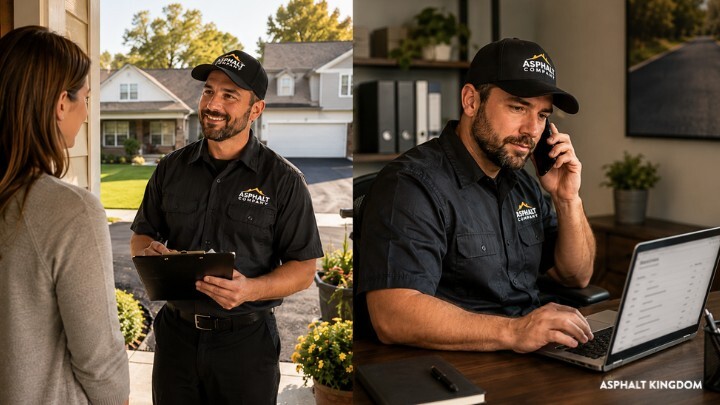](https://blog.asphaltkingdom.com/door-to-door-vs-cold-calling-asphalt)
### [Door-to-Door vs Cold Calling: How to Land Your First Asphalt Jobs](https://blog.asphaltkingdom.com/door-to-door-vs-cold-calling-asphalt)
[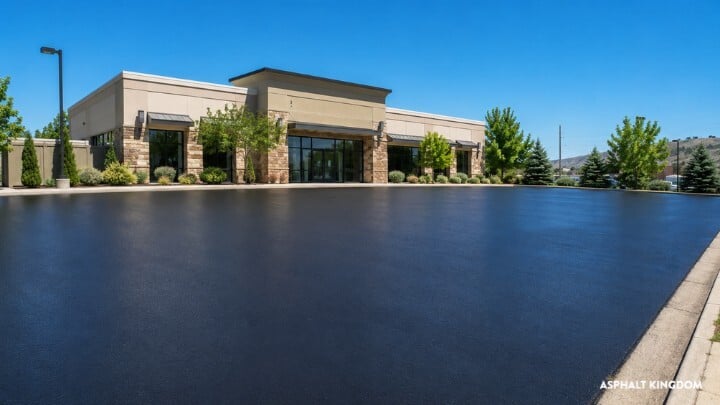](https://blog.asphaltkingdom.com/parking-lot-sealcoating-aftercare)
### [Parking Lot Sealcoating Aftercare: A Property Owner's Guide](https://blog.asphaltkingdom.com/parking-lot-sealcoating-aftercare)
[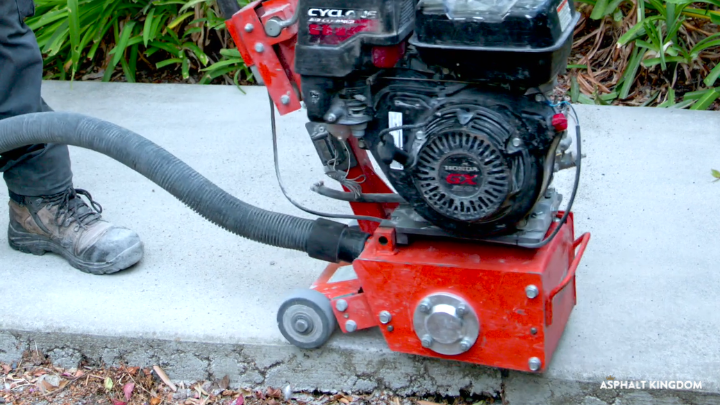](https://blog.asphaltkingdom.com/profitable-asphalt-services-business-growth)
### [7 Profitable Services to Add to Your Asphalt Business in 2026](https://blog.asphaltkingdom.com/profitable-asphalt-services-business-growth)
## Equipment
- [All Equipment](https://www.asphaltkingdom.com/sealcoating-equipment.html)
- [Spray Systems](https://www.asphaltkingdom.com/sealcoat-sprayer.html)
- [Crack Filling Equipment](https://www.asphaltkingdom.com/crack-filling-equipment.html)
- [Line Striping Machines](https://www.asphaltkingdom.com/striping-machines.html)
- [Stencil Shop](https://www.asphaltkingdom.com/parking-lot-stencils.html)
- [Parts & Accessories](https://www.asphaltkingdom.com/parts-and-accessories.html)
## Supplies
- [All Supplies](https://www.asphaltkingdom.com/supply-store.html)
- [Sealer](https://www.asphaltkingdom.com/asphalt-sealer.html)
- [Crack Filler](https://www.asphaltkingdom.com/crack-fill-store.html)
- [Line Paint](https://www.asphaltkingdom.com/parking-line-paint.html)
- [Asphalt Patch Repair](https://www.asphaltkingdom.com/asphalt-patch.html)
- [Complete Packages](https://www.asphaltkingdom.com/start-a-business.html)
## Account & Resources
- [Log In / My Account](https://www.asphaltkingdom.com/customer/account/login/)
- [Create Account](https://www.asphaltkingdom.com/customer/account/create/)
- [AK Royalty Rewards](https://www.asphaltkingdom.com/royalty-rewards)
- [About Us](https://www.asphaltkingdom.com/about-us.html)
- [Shipping Information](https://www.asphaltkingdom.com/our-policies.html#shipping-policies)
- [Customer Service](https://www.asphaltkingdom.com/customer-service)
- [Knowledgebase](https://www.asphaltkingdom.com/asphalt-faq.html)
- [Financing](https://info.asphaltkingdom.com/financing)
- [Testimonials](https://info.asphaltkingdom.com/testimonials)
- [Marketing Support](https://info.asphaltkingdom.com/asphalt-maintenance-resources)
## Get In Touch
###### Phone
[1-866-399-5562](tel:1-866-399-5562)
###### Email
sales@asphaltkingdom.com
###### Working Days
Mon–Sat, 8:00am–8:00pm ET
###### MORE LANGUAGES
[English](https://info.asphaltkingdom.com/contact)
[French / Francais](https://info.asphaltkingdom.com/fr-ca/adi-asphalt-specialist)
[Spanish / Español](https://info.asphaltkingdom.com/es/mantenimiento-de-asfalto)
 [](https://www.asphaltkingdom.com/)
[+18556514902](tel:+18556514902) [+18556377446](tel:+18556377446) [+18447911987](tel:+18447911987) [+18773532745](tel:+18773532745) [+18555361977](tel:+18555361977) [+18445822894](tel:+18445822894) [+18558786493](tel:+18558786493)

### Be the first to know about new products and special sales
[](https://www.facebook.com/YourAsphaltKingdom/) [](https://www.youtube.com/@AsphaltKingdom/?sub_confirmation=1) [](https://x.com/Asphalt_Kingdom) [](https://www.instagram.com/asphaltkingdom/) [](https://www.linkedin.com/company/asphalt-kingdom/)
Copyright © 2004-2026 Asphalt Kingdom. All rights reserved. | [Sitemap](https://www.asphaltkingdom.com/sitemap.xml) | [Our Policies](https://www.asphaltkingdom.com/our-policies.html)
```json
{
"@context" : "https://schema.org",
"@type" : "BlogPosting",
"author" : {
"@type" : "Person",
"name" : "Judson Burdon",
"url" : "https://blog.asphaltkingdom.com/author/judson-burdon"
},
"dateModified" : "2026-04-09T15:02:46.505Z",
"datePublished" : "2026-04-09T15:02:46.000Z",
"headline" : "How to Sell Your Asphalt Business: The Contractor's Exit Strategy",
"image" : [ "https://blog.asphaltkingdom.com/hubfs/Blog%20Images%20(16)-2.jpg" ],
"mainEntityOfPage" : {
"@id" : "https://blog.asphaltkingdom.com/sell-asphalt-business",
"@type" : "WebPage"
},
"publisher" : {
"@type" : "Organization",
"logo" : {
"@type" : "ImageObject",
"url" : "https://blog.asphaltkingdom.com/hubfs/AK_Logo_Full-2.png"
},
"name" : "Asphalt Kingdom"
}
}
```
```json
{
"@context" : "https://schema.org",
"@type" : "FAQPage",
"mainEntity" : [ {
"@type" : "Question",
"acceptedAnswer" : {
"@type" : "Answer",
"text" : "On average, selling a small business takes between six and nine months. It takes time to prepare your documents, find a serious buyer, and complete the legal paperwork. Start planning your exit at least a year before you actually want to retire."
},
"name" : "How long does it take to sell an asphalt company?"
}, {
"@type" : "Question",
"acceptedAnswer" : {
"@type" : "Answer",
"text" : "You do not strictly need a broker, but having one helps a lot. A broker knows how to price the company correctly. They also know how to find qualified buyers without tipping off your local competitors. If you want to save on commission fees, you can sell it yourself, but you must be ready to do all the heavy lifting."
},
"name" : "Do I need a broker when selling my asphalt business?"
}, {
"@type" : "Question",
"acceptedAnswer" : {
"@type" : "Answer",
"text" : "In most cases, the new owner will want to keep your crew. Experienced asphalt workers are hard to find. The buyer is paying for a business that works right now, and your employees are a huge part of that daily success. Be honest with your crew once the deal is completely final, and assure them their jobs are safe."
},
"name" : "What happens to my crew when I sell?"
}, {
"@type" : "Question",
"acceptedAnswer" : {
"@type" : "Answer",
"text" : "Yes, you can. However, old equipment will lower your asking price. The buyer knows they will have to spend money replacing trucks and sprayers very soon. If your machines are falling apart, it might be smart to replace a few key items before you list the company."
},
"name" : "Can I sell my business if my equipment is old?"
}, {
"@type" : "Question",
"acceptedAnswer" : {
"@type" : "Answer",
"text" : "Wait until the deal is completely closed before you announce anything. If word gets out too early, your customers might panic and look for another contractor. Once the ink is dry, send out a friendly letter or email introducing the new owner and thanking your customers for their loyalty."
},
"name" : "Should I tell my customers I am selling?"
}, {
"@type" : "Question",
"acceptedAnswer" : {
"@type" : "Answer",
"text" : "Confidentiality is very important. You do not want your competitors spreading rumors that you are closing down. Always require potential buyers to sign a Non-Disclosure Agreement (NDA) before you show them your financial records or customer lists."
},
"name" : "How do I keep my sale a secret?"
} ]
}
```